The Artist · 1904 — 1992
A life that made
painting real.
Dorothy Kate Stoner (1904–1992) is one of Australia’s lost women artists; the earliest known facts of her life had been almost forgotten by the time she died in 1992. No family members survive in Australia. There is no-one to document her life, celebrate her friendships or elevate the things she found important. Yet she is an important Tasmanian artist, who forged an original and outstanding body of work that set her apart from her contemporaries. Dorothy was born in Sussex, England on 28 November 1904, spent her childhood in Canada on the prairies of Alberta during the First World War, and arrived in Tasmania in 1921 where she stayed for the remainder of her life.
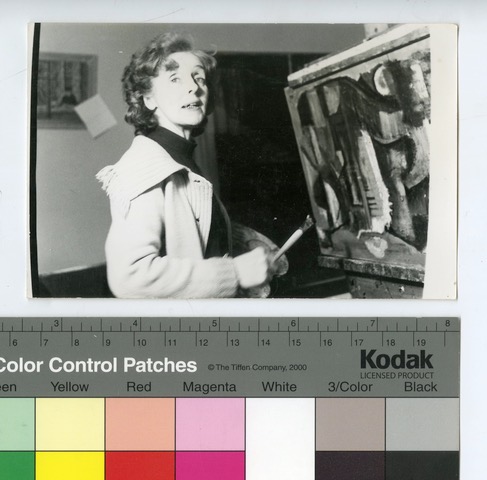
Dorothy studied at the Hobart Technical College (1936–1940) under Lucien Dechaineux and Mildred Lovett, and at the George Bell School in Melbourne (1939) with fellow students Russell Drysdale, David Strachan, Fred Williams and Eric Thake, all of whom have been recognised as among the greats of modern Australian art.
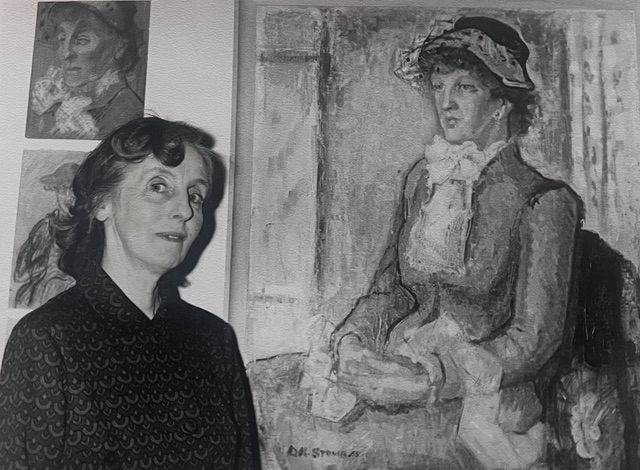
Artist George Davis, her lifelong friend, wrote
“Dorothy is the most unknown and under-rated [of] women painters in Australia. It can be said that her commitment to painting and the search for truth was devotional ‘forsaking all other’. She had a quality of involvement and personal revealment that is most uncommon in men painters and very rare in women. Something which cannot be appelled fortunately or taught in art schools. It is the essence which finally sorts the whole art field.”
She attended the Académie de la Grande Chaumière and the studio of Édouard-Georges Mac-Avoy in Paris (1949–1950) and as a result of her studies entered the vanguard of women who influenced Modernist art in Australia. Dorothy searched for opportunities to study with those who impressed her including Godfrey Miller, Desiderius Orban, John Passmore, Dorothy Thornhill and John Ogburn and fostered friendships with artists, students and gallerists across Australia. Works by Dorothy Stoner are found in state and national galleries as well as private collections.
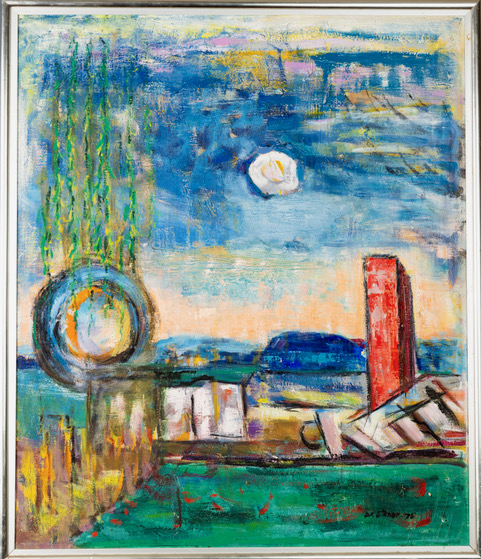
With that in mind, we venture to rediscover Dorothy Stoner. Over six decades she fulfilled her deepest wish. She became a painter and doyenne of art and culture.
Dorothy Stoner’s Suitcase – Rediscovering Tasmania’s Treasured Painter aims to bring her oeuvre to the attention of a wider public and to celebrate her contribution to Modernism in Australia.
Timeline
1904
Born in England.
1921
Migrates with her family to Tasmania.
1936
Begins study at Hobart Technical College (1936–1940), under Lucien Dechaineux and Mildred Lovett.
1938
Founding member of the Contemporary Art Society of Australia.
1939
Studies at the George Bell School in Melbourne, alongside Russell Drysdale, David Strachan, Fred Williams and Eric Thake.
1940
Returns to teach at the Hobart School of Art; active in the Art Society of Tasmania.
1967
First commercial exhibition — at the age of 63.
1992
Dies, leaving a body of work held by TMAG, UTAS and QVMAG.
“When I am not painting, I feel like a shadow. Painting makes life real and gives life body.”
Held in the collections of
- Tasmanian Museum and Art Gallery
- University of Tasmania
- Queen Victoria Art Gallery